Crisis in Champagne
How Our Warming Climate and Historic Heatwave Forced the World’s Most Iconic Sparkling Wine to Confront Its Future
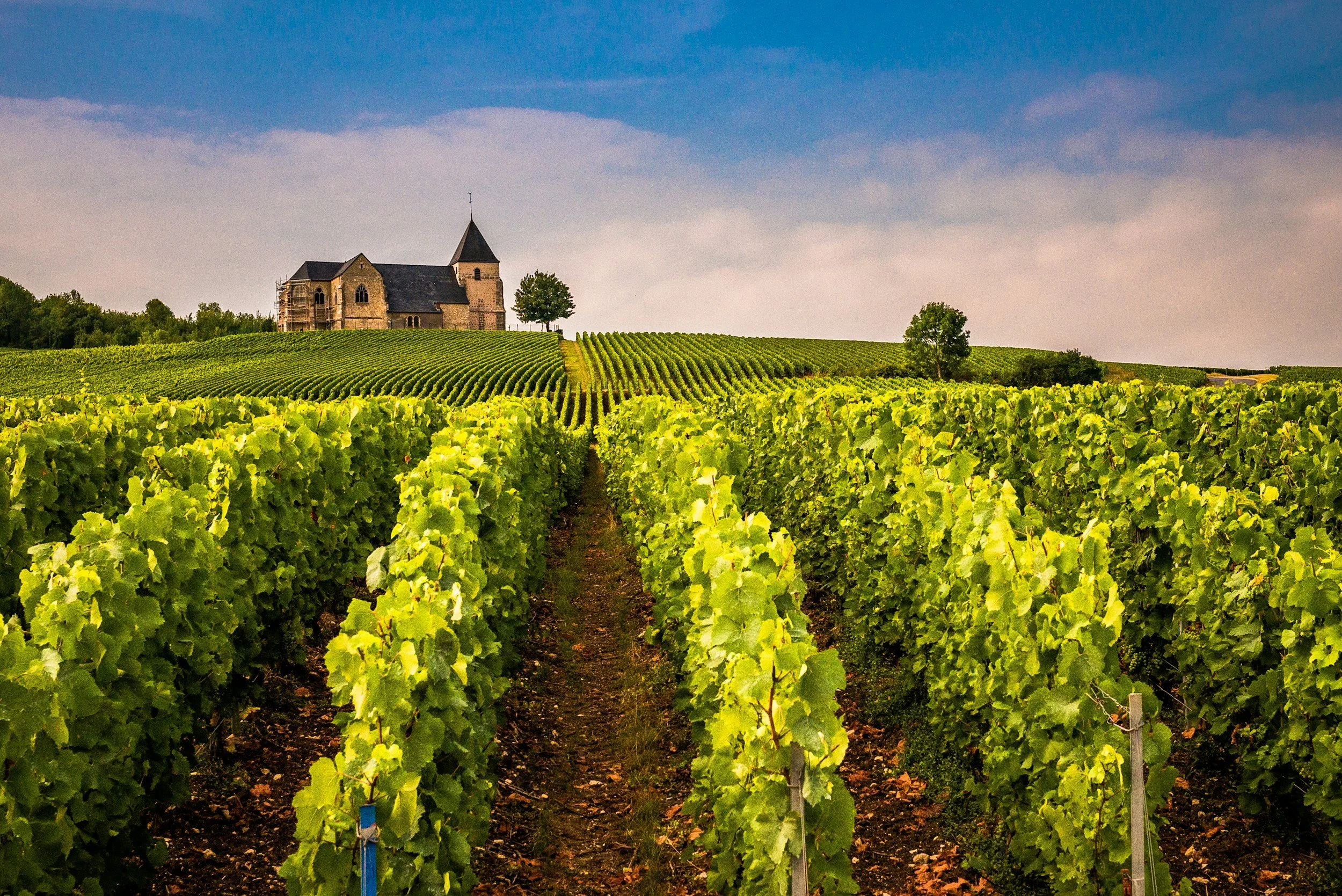
hen the first clusters of Chardonnay and Pinot Noir were cut from the vines in early August, the earliest harvest in Champagne’s recorded history, the region’s growers already knew they were facing a vintage unlike any other. The 2026 growing season had been defined by relentless heat, parched soils, and a ripening curve so accelerated that sugar levels surged past anything the region’s regulatory framework had ever anticipated. By mid‑month, some parcels were showing potential alcohol levels well above the legal ceiling of 13% ABV. Historically, Champagne alcoholic levels were between 11.5% -12.5% ABV, however in 2026, the Champagne region, long defined by its restraint, suddenly found itself brushing up against 15% ABV.
In a move that stunned even seasoned observers, French authorities approved a temporary derogation allowing Champagne to reach that level — a historic first. The decision wasn’t celebratory; it was defensive. Without the waiver, producers risked being penalized for natural conditions beyond their control but the implications of this moment stretch far beyond bureaucratic flexibility. They touch the very soul of Champagne: its flavour, its identity, and its future.
The heatwave that rewrote the rulebook - The 2026 season was shaped by a series of extreme heat events that pushed daytime temperatures into the Mediterranean territory including a 10 day stretch of over 33°C. Drought tightened its grip on the chalky soils. Ripening accelerated, acidity dropped faster than expected and sugar levels soared. Growers describe the season as “compressed”… a year in which the delicate dance between ripeness and freshness became a sprint. Grapes that were physiologically immature suddenly carried the sugar load of fully ripe fruit. The Comité Champagne, faced with base wines that could legally exceed the region’s alcohol limit, petitioned the government for emergency relief. The result: a one‑year allowance for Champagne to reach up to 15% ABV, a number more commonly associated with Amarone or fortified wines than the world’s most celebrated sparkling wine. Most Champagnes will not reach that level, but the fact that any could — and legally may — marks a turning point.
Will Champagne taste different due to the flavour consequences of higher alcohol ? Champagne’s identity has always rested on a fragile equilibrium: piercing acidity, low alcohol, chalk‑driven minerality, and a sense of weightless precision. When alcohol rises, that equilibrium shifts — sometimes subtly, sometimes dramatically.
Higher alcoholic Champagne will be a warmer, rounder and feel more voluminous on your palate. Alcohol brings heat, even a move from 12% to 13.5% can create a perceptible warmth on the mid‑palate and finish. At 14% or above, the wine begins to feel fuller, broader, and more assertive. The mousse may soften slightly, the bubbles feeling creamier rather than razor‑fine.
By: J. Pallotta Vin Amator News - September 2026
W
Higher alcohol levels will also reduce freshness as it will suppress perceived acidity. The result is a Champagne that feels less electric, less vertical, less driven by the chalky snap that defines the region’s terroir. The signature “lift”, that sensation of coolness and cut, becomes harder to preserve. Riper Fruit and a less citrus backbone will push the aromatic development toward ripe peach, baked apple, pear compote and hints of tropical fruit. The classic notes of lemon zest, green apple, and crushed shell may recede. In extreme cases, the fruit profile may resemble warm‑climate sparkling wine more than traditional Champagne.
Greater Variability Between Houses…Champagne is a region of style as much as terroir. Houses known for tension and precision (Agrapart, Roederer, Lanson) may struggle more visibly. Those with richer, more oxidative styles (Krug, Bollinger, Selosse) may absorb the shift more naturally. Blending, the region’s greatest tool, becomes both more challenging and more essential.
A Temporary Rule with Long-Term Implications… The 15% allowance is officially a one‑year measure but growers and climatologists warn that 2026 is not an anomaly, it is a preview. Champagne’s climate has warmed by more than 1.5°C over the past 30 years, and the frequency of heatwaves is rising sharply.
If these conditions persist, Champagne may need to rethink their canopy management, irrigation strategies (currently restricted), earlier picking, increased use of reserve wines, potential authorization of new grape varieties and possibly new pressing and fermentation protocols. Some Champagne producers speak openly of a “Mediterranean shift,” a slow but steady migration of Champagne’s flavour profile toward rounder, riper, more textural expressions.
The Paradox of Progress - Champagne has always been a region defined by adaptation. It survived phylloxera, world wars, frost‑ravaged vintages, and the rise of global competition. Climate change presents a different kind of challenge, one that strikes at the core of what Champagne is supposed to taste like.
The 2026 derogation is not a stylistic revolution but a regulatory bandage, yet it forces a question that the region can no longer avoid: “What happens when the world’s most iconic cool‑climate wine region is no longer cool? “ For now, Champagne remains Champagne — luminous, precise, celebratory. But the 2026 vintage will be remembered as the year the region looked directly into its future and realized that the balance it has protected for centuries may soon require reinvention.