Global Wine Consumption


Global wine consumption refers to the total amount of wine consumed worldwide measured in million hectolitres (mhl). 1 hectolitre is equivalent to 100 litres or 133 standard wine bottles (750ml).
Period Ending December 2024
Global Consumption:
214.2 million hectolitres
25.3 billion bottles
Country‑Level Consumption
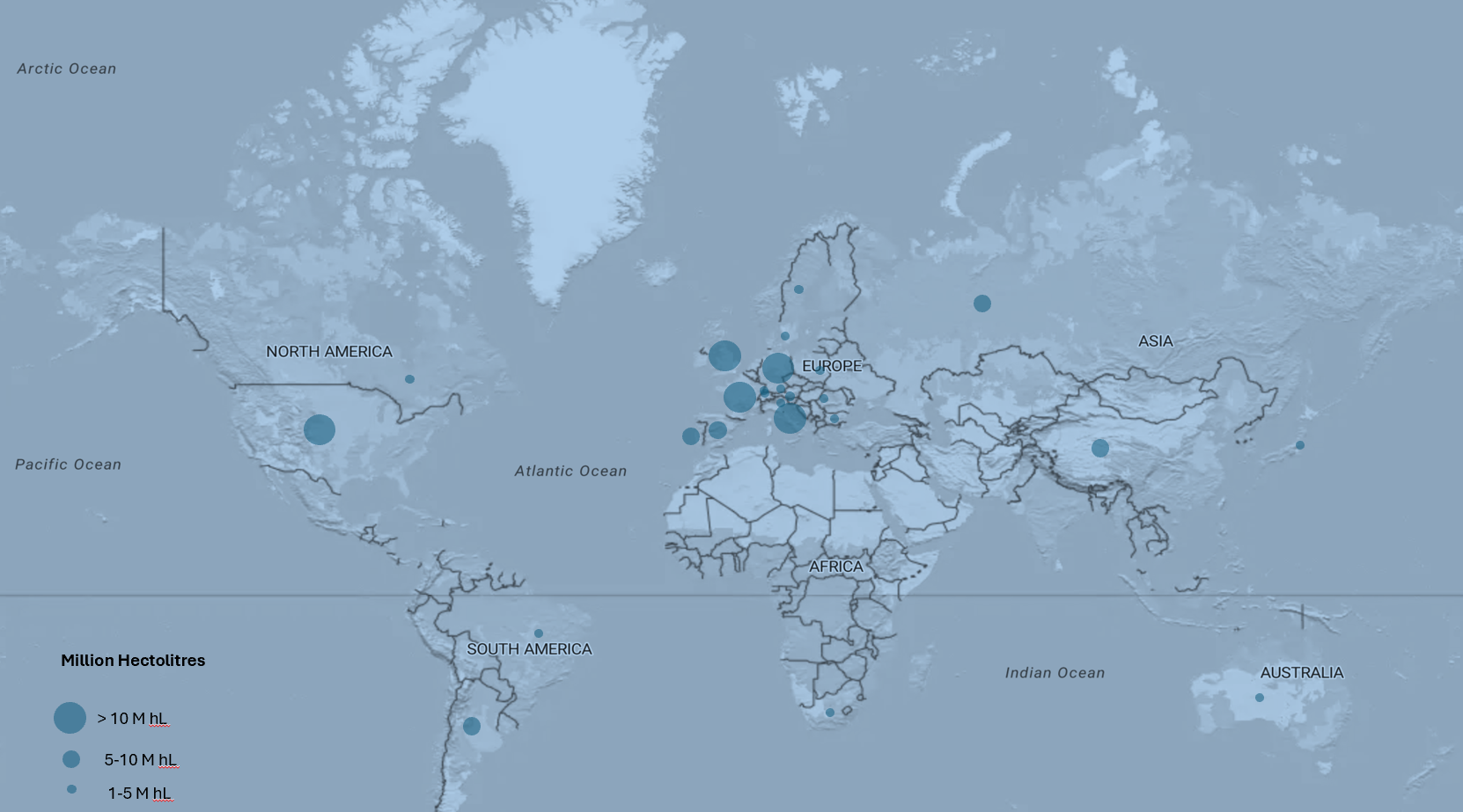
U.S. is the world’s #1 consumer (≈33.3M hL/3.33B L)
France & Italy follow Canada ranks 12th with 4.57M hL
Top 5 countries - US, France, Italy, Germany, Uk
account for 109 m HL or 145 billion bottles
51% of global consumption

Global Wine Consumption - Map
Top 25 Countries
Summary:
Global Consumption
214.2 million hectolitres
25.3 billion bottles
Consumption down 3.3% from 2023
Lowest consumption in 60+ years
Country‑Level Consumption
U.S. is the world’s #1 consumer (≈33.3M hL / 3.33B L)
France & Italy follow and Canada ranks 12th with 4.57M hL
Top 5 countries - US, France, Italy, Germany, Uk
Account for 51% of global wine consumption
109 m HL or 145 billion bottles of wine
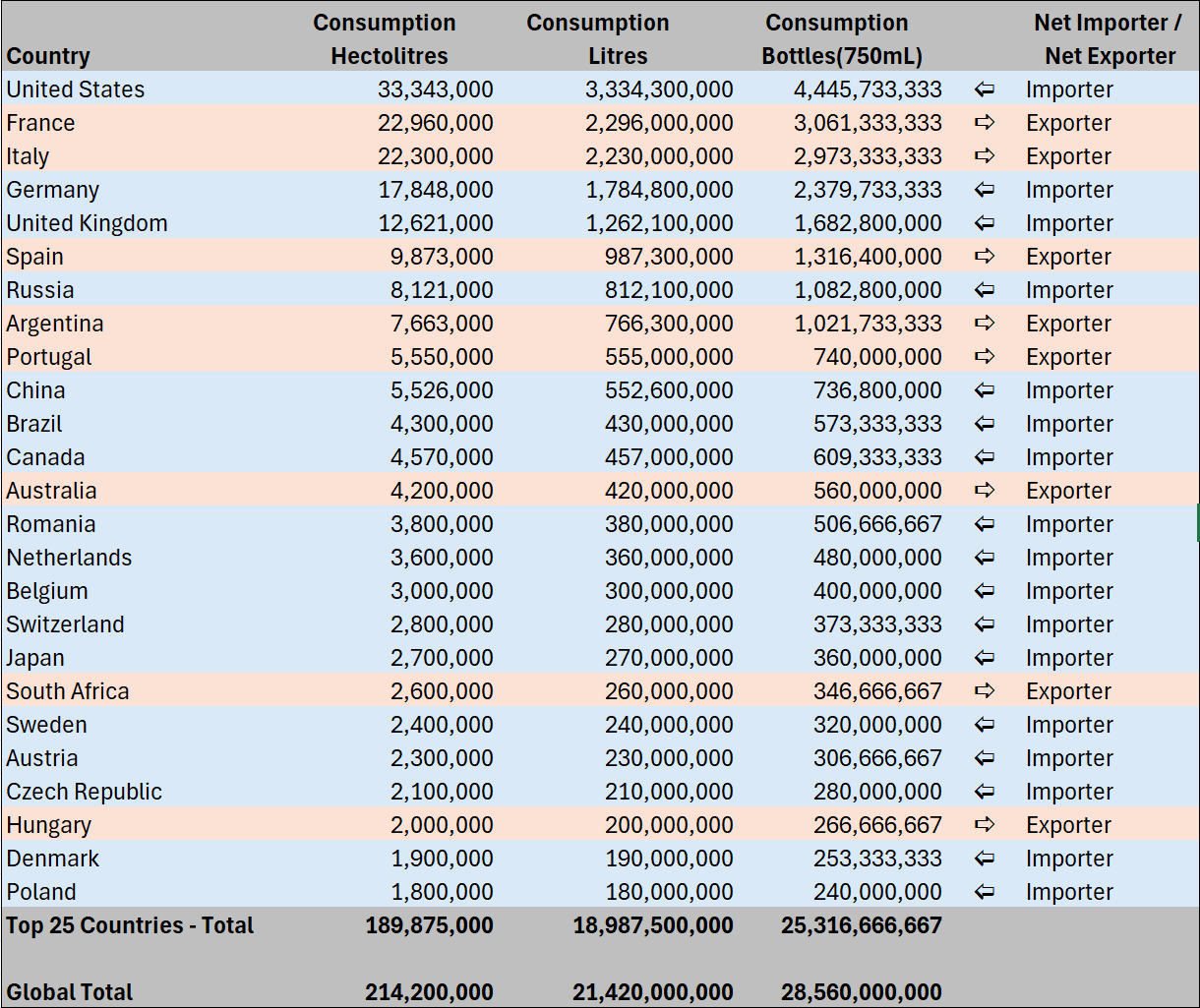
Global Wine Consumption - Chart
Top 25 Countries
Analysis
Global Consumption
214.2 million hectolitres or 25.3 billion bottles
Consumption down 3.3% from 2023
Lowest consumption in 60+ years
Country‑Level Consumption
U.S. is the world’s #1 consumer at 33.3 million Hectolitres
France & Italy follow Canada ranks 12th with 4.57M hL
Top 5 countries - US, France, Italy, Germany, Uk
Account for 51% of global wine consumption
109 m HL or 145 billion bottles of wine
Net Importer / Exporter
8 of the Top 25 Wine Consumption Countries produce more wine than they consume. They are considered net exporters. (France, Italy, Spain, Argentina, Portugal, Australia, South Africa).
The remaining 17 countries consume more wine than they produce
Top 5 Importers are US, UK, Germany, Canada and China
These 5 countries import a net total of 41.7 million Hectolitres of wine or 5.4 billion bottles
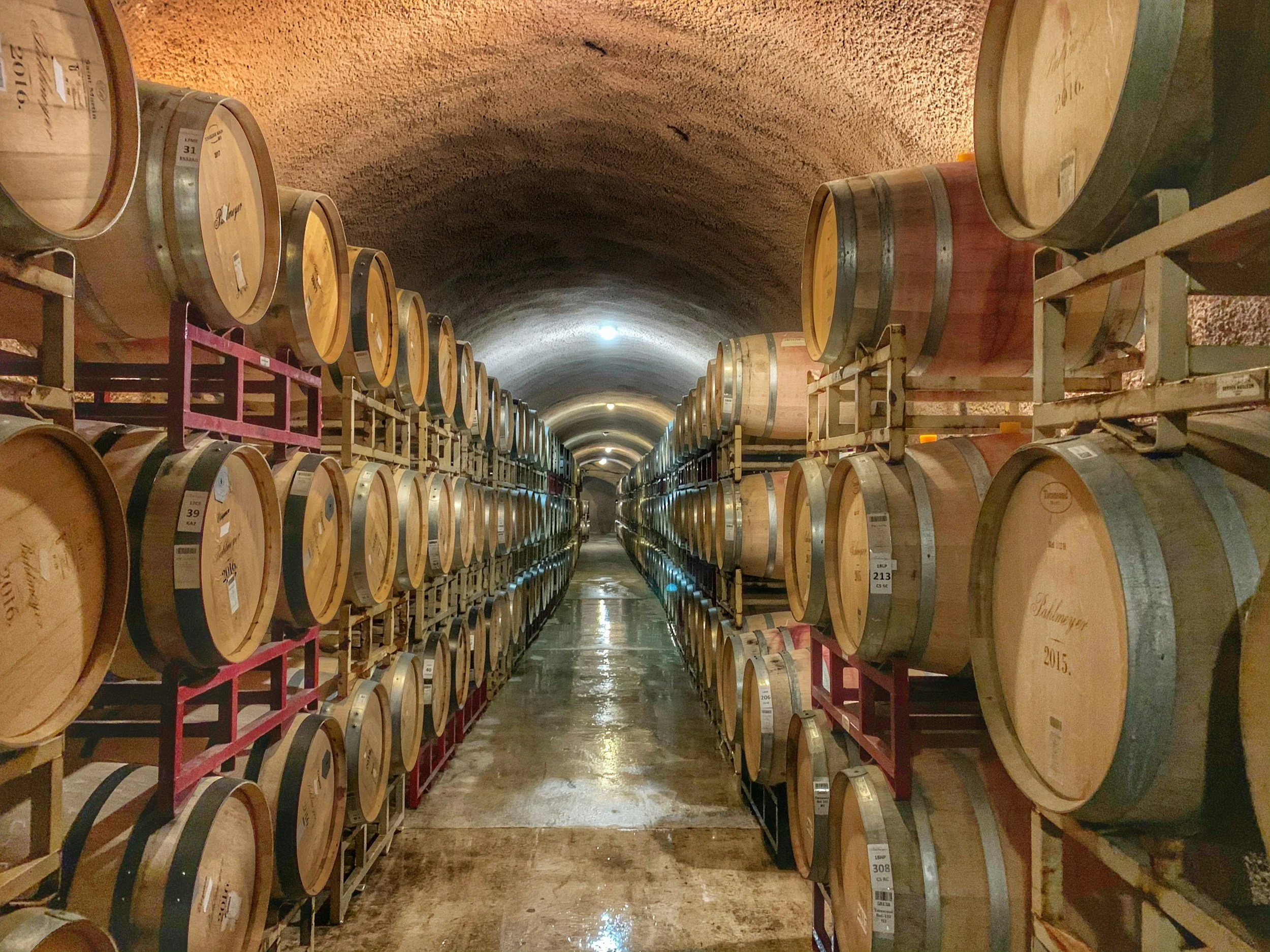
Annual Wine Production exceeding Consumption
Analysis
Global wine production exceeded consumption by 11.6 million hectolitres or 1.6 billion bottles
5% over production in 2024
Rationale:
Not all wine produced is intended for immediate consumption.
A significant portion of global wine production goes into Aging programs (Barolo, Rioja, Bordeaux, Amarone, Napa Cabs, etc.), Reserve stocks held by producers, Bulk wine inventories held by traders and strategic reserves in some countries
Inventory accumulation - Some wine is carried over from previous vintages
Losses, waste, and non‑beverage uses
Some wines used for Vinegar production, Distillation (brandy, cognac, grappa, industrial alcohol), Cooking wine, Pharmaceutical or cosmetic alcohol and simple waste due to spoilage, oxidation, or faults
Exports vs. imports timing mismatch
Not all wine produced and issued in a given year is consumed in that year
Statistical under‑reporting of consumption is common
Some production includes wine that will never be sold.
Some producers intentionally dump low‑quality wine, use some wine for distillation, some wine blended into industrial alcohol and other wine destroyed
Overall, the wine sector is structurally oversupplied
For the last 20 years, global wine production has consistently exceeded consumption
Demand is declining (especially among younger consumers)
Production capacity remains too high
Inventories are growing, 2024 is simply the latest example of this long‑term imbalance